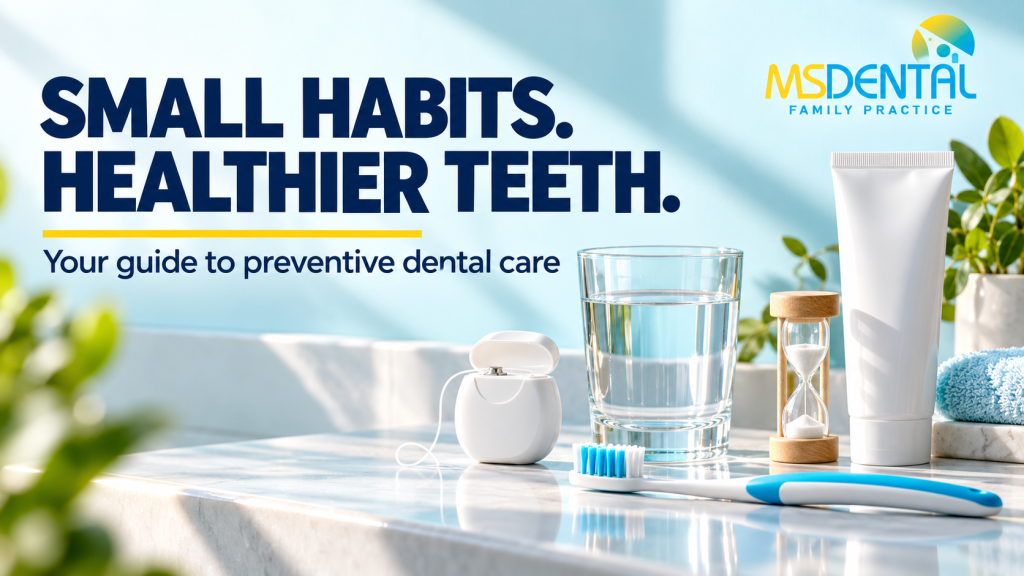
Nobody plans to need a root canal. Or a crown. Or an implant. Yet many of the biggest dental bills start with something tiny: a patch of plaque that becomes a cavity, or a little gum bleeding that is easy to ignore.
According to the Australian Institute of Health and Welfare, there were around 88,600 hospitalisations in 2023–24 for dental conditions that could potentially have been prevented with earlier treatment.
The good news? Prevention is not complicated, and it is one of the most reliable ways to protect both your smile and your wallet. Here is what actually makes the difference.
In this article
- Why Prevention Saves Money
- Part 1: Daily Habits That Do the Heavy Lifting
- Part 2: Regular Check-Ups and Cleans
- Part 3: Protective Treatments
- Part 4: Act Early When Something Changes
- Part 5: Prevention at Every Age
- Making Prevention Affordable
- Your Quick Prevention Checklist
- How Often Should You Actually Come In?
- Frequently Asked Questions
Why Prevention Saves Money
Most dental problems are progressive. They start small and grow if left alone:
- Tooth decay moves from an early white spot to a small cavity, then a larger one, and eventually to infection of the nerve.
- Gum disease moves from gingivitis, which is reversible, to periodontitis, which damages the bone holding your teeth in place.
At every step, treatment becomes more involved and more costly. Prevention aims to stop problems at the earliest stage, or before they start. For a closer look at how costs build, see Why Is Dental Care So Expensive in Australia?
Illustrative example
A small habit, a big difference
Imagine a Cardiff office worker named Lauren. She sips a sweetened iced coffee across most of the afternoon, every workday. She brushes well, but those constant sips keep her teeth bathed in sugar and acid for hours.
At her check-up, her dentist spots early white spots along the gumline. Instead of jumping to treatment, they talk through a simple change: have the coffee with lunch, then switch to water. Add a high-fluoride toothpaste, and at her next review, the early spots have not progressed.
Part 1: Daily Habits That Do the Heavy Lifting
Most of these basics are also recommended by healthdirect, and they are where most of the protection comes from:
- Brush twice a day with fluoride toothpaste for two minutes. Spit, do not rinse, so the fluoride keeps working.
- Clean between your teeth daily with floss or interdental brushes. Your brush cannot reach those gaps, and that is where decay and gum disease often begin.
- Watch how often, not just how much. Every sugary snack or drink starts a fresh acid attack. Keeping sweets to mealtimes helps a lot. More in sugar and tooth decay in Australia.
- Drink tap water. It is fluoridated for most Australians and rinses away food.
- Do not smoke or vape. Both raise the risk of gum disease and slow healing.
- Clean your tongue. Our post on tongue scrapers explains how.
Short on time? Our oral hygiene tips for busy lifestyles are made for you.
Part 2: Regular Check-Ups and Cleans
Even with great home care, professional visits matter. A check-up and clean at MS Dental typically includes:
- A thorough dental examination of teeth, gums and soft tissues
- X-rays when needed, to find hidden decay between teeth
- Removal of plaque and hardened tartar that brushing cannot shift
- Personalised advice for your mouth
Many cavities are painless early on, which is why we still recommend check-ups when everything feels fine. More in Tooth Decay Without Pain.
Most people benefit from a visit every six to twelve months, but your dentist will tailor this to your risk. At our Cardiff and Fletcher clinics, some patients may also be offered AIR-FLOW cleaning. You can compare it with traditional cleaning in our post on AIR-FLOW vs traditional scaling.
Part 3: Protective Treatments
- Fissure sealants: a protective coating for the deep grooves of back teeth, commonly recommended for children. healthdirect explains how sealants work.
- Professional fluoride: a concentrated application for people at higher risk of decay.
- Custom mouthguards: a custom-fitted mouthguard protects teeth during contact sport. Treating a knocked-out tooth can cost far more. See mouthguards for active kids.
- Night splints: if you grind or clench, a splint reduces wear and the risk of cracked teeth.
Part 4: Act Early When Something Changes
Prevention also means not waiting. Book in if you notice:
- Sensitivity to hot, cold or sweet foods
- Bleeding gums (read why you should not ignore bleeding gums)
- A chipped tooth or lost filling
- Persistent bad breath
- Pain when biting
A small filling today can prevent root canal treatment and a crown tomorrow. Early gum disease treatment is simpler too.
Part 5: Prevention at Every Age
- Children: start early and use the Child Dental Benefits Schedule if eligible. See children's dentistry and our child dental bulk billing.
- Young adults: keep check-ups going after leaving home and keep an eye on wisdom teeth. Read Why Are Young Australians Skipping Dental Check-Ups?
- Adults: manage grinding, gum health and older fillings.
- Older adults: dry mouth and gum recession raise decay risk, so regular reviews matter.
If you already have implants, crowns, bridges or dentures, regular reviews help them last. Our guide on maintaining dental implants has tips.
Making Prevention Affordable
- Use your extras. Many policies cover a large share of preventive visits. See our preferred provider information.
- Plan around your annual limits. Unused annual benefits usually do not carry over, so it can help to schedule any care your dentist has already recommended within your benefit year.
- Explore other options in Can't Afford a Dentist? Affordable Dental Care Options in Newcastle.
Your Quick Prevention Checklist
- Brush twice daily with fluoride toothpaste
- Clean between your teeth once a day
- Keep sugar to mealtimes
- Choose tap water
- Wear a mouthguard for contact sport
- Book your next check-up before you leave the clinic
How Often Should You Actually Come In?
There is no single answer, and that is the point of a personalised plan. As a rough guide:
- Low risk: healthy gums, little history of decay, good home care. Often every 12 months.
- Moderate risk: some past fillings or occasional gum bleeding. Often every six months.
- Higher risk: frequent decay, gum disease, dry mouth, braces or a lot of dental work. Sometimes every three to four months.
Your dentist will recommend what suits you, and it can change over time as your risk changes. The aim is simple: see you often enough to catch problems early, and not more than you need.
Frequently Asked Questions
Can good brushing replace a professional clean?
No. Hardened tartar cannot be removed with a toothbrush, and a dentist can spot problems you cannot see.
Is preventive care covered by health insurance?
Most general dental extras include check-ups and cleans, subject to limits and waiting periods.
Let Us Build Your Prevention Plan
A check-up and clean is a simple investment in your teeth. We will assess your risk and give you a simple, personalised plan to help you avoid bigger treatment down the track.
Refer a friend to MS Dental and you could both receive a 10% discount on your next appointment (minimum spend $300, discount capped at $50, one discount per patient, the new patient redeems their referral card first, and it cannot be combined with other offers). Full terms and conditions.
This article is general information only and does not replace personalised advice from your dentist.