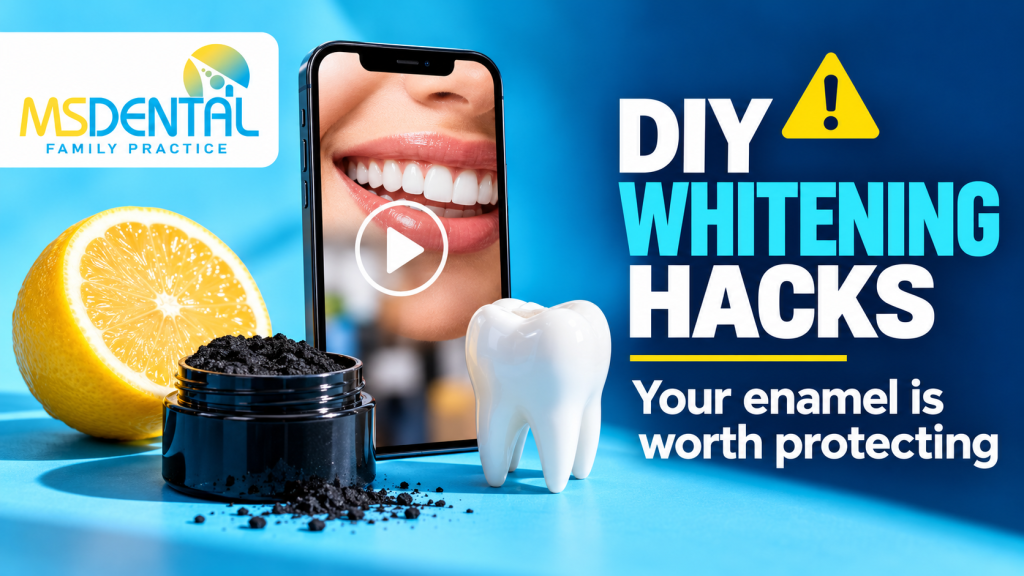
You have probably seen them. Someone mixes lemon juice and baking soda, scrubs for thirty seconds, flashes a grin, and racks up a million views. It looks easy, cheap and oddly satisfying.
You are not alone in being tempted. The Australian Dental Association's 2025 Consumer Survey found that around three in five Australians say social media is shaping their cosmetic dental decisions.
The catch? Many of these hacks can permanently damage your teeth. Enamel does not grow back, so a trend that lasts a few weeks online can leave you with consequences for life. Let us look at what is really going on.
First, Why Do Teeth Change Colour?
There are two broad types of discolouration:
- Surface stains from coffee, tea, red wine, smoking and some foods. These sit on the enamel and often lift with a professional clean.
- Internal discolouration within the tooth, caused by ageing, trauma, some medications, or a tooth that has lost its nerve.
Some discolouration is also a warning sign of decay or a dying tooth, which is one reason dentists recommend an examination before any whitening.
The Popular Hacks, and What They Actually Do
1. Lemon juice, vinegar and baking soda
The fizz looks impressive, but lemon juice and vinegar are acids. Acid softens enamel, and scrubbing an abrasive paste over softened enamel wears it faster. Here is the irony: as enamel thins, the yellower layer underneath (dentine) shows through more. So this "whitening" hack can make teeth look more yellow, and more sensitive.
2. Activated charcoal
Charcoal may lift some surface stains, but it is abrasive. Regular use can wear enamel and irritate gums, and many charcoal products contain no fluoride to protect against decay.
3. Strawberry scrubs
Mild acid plus sugar, rubbed directly on your teeth. It is unlikely to whiten anything meaningfully, and it is not a combination your enamel will thank you for.
4. Household hydrogen peroxide
Peroxide is the active ingredient in professional whitening, but strength, timing and gum protection all matter. Used incorrectly, it can cause gum burns and significant sensitivity. In Australia, the Poisons Standard, as summarised by the Australian Dental Association, means products above 6 per cent hydrogen peroxide (or 18 per cent carbamide peroxide) may only be supplied and used by registered dental practitioners.
5. Overseas kits and strips bought online
These may not meet Australian standards, and labels are not always accurate. Some contain chlorine dioxide, which works by etching the enamel surface.
6. Filing teeth with a nail file
Please do not. This removes enamel that cannot be replaced and can expose the inner layers of the tooth, leading to pain, infection and costly repairs.
Illustrative example
The "cheap" fix that was not
Imagine a 22-year-old named Mia. She tries a lemon and baking soda scrub several times a week for a month. At first her teeth look a little brighter. Then cold drinks start to sting, and the edges of her front teeth look slightly see-through.
At her check-up, the dentist explains that the enamel has been worn. Mia now needs a protective treatment plan and, eventually, possibly bonding to cover the worn areas. A check with her dentist before trying the hack could have spared her enamel, and the cost of repairing it.
How to Judge a Dental Video Before You Try It
Not every video is harmful, but a healthy dose of scepticism helps. Ask yourself:
- Is this person a registered dental practitioner? You can check on the Ahpra public register.
- Are the before and after shots taken in the same lighting, without filters?
- Is a product being promoted through an affiliate link or sponsorship?
- Does the advice involve acids, abrasives or filing?
If any answer gives you pause, ask your dentist first.
Signs Your Teeth May Already Be Affected
Book in if you notice:
- New or increased sensitivity to hot, cold or sweet foods
- Teeth that look more yellow, or see-through at the edges
- A rough feel on the tooth surface
- White patches or burns on the gums
- Chips or thin edges on the front teeth
Damaged enamel may need bonding, veneers or crowns, and a tooth that becomes infected may need root canal treatment. For how small issues turn into big bills, read How to Avoid Expensive Dental Treatments Through Preventive Care.
Safer Ways to a Brighter Smile
Start with a clean
You might be surprised by how much brighter your teeth look after a professional check-up and clean. For many people, that is all they need. At our Cardiff and Fletcher clinics, some patients also benefit from AIR-FLOW cleaning, which uses a fine powder and water spray to lift surface staining.
Professional teeth whitening at MS Dental
If you would still like a lighter shade, our teeth whitening treatments are planned and monitored by your dentist. Before we begin, we check for decay, gum disease and existing fillings or crowns, because those do not change colour with whitening. Options include in-chair Zoom whitening and supervised take-home kits, and we will explain what is realistic for your teeth.
Results vary from person to person, and some people experience temporary sensitivity. We will talk you through that before you decide.
When whitening is not the answer
If discolouration is internal or comes from a damaged tooth, whitening may not help. Your dentist may suggest white spot treatment or veneers instead.
Keeping Your Smile Bright the Easy Way
Once your teeth are clean (or whitened), a few small habits help them stay that way:
- Drink coffee, tea or red wine with meals rather than sipping over hours
- Rinse with water after staining drinks
- Use a straw for iced coffee and soft drinks
- Do not smoke or vape
- Keep up regular check-ups and cleans
None of these will go viral, but they genuinely work, and they will not cost you any enamel.
Frequently Asked Questions
Is whitening toothpaste safe?
Whitening toothpastes can help with surface stains, although some are more abrasive than regular toothpaste. Choose one with fluoride.
Do LED whitening lights at home work?
On its own, the light does not whiten. Any effect comes from the gel, which is why the gel's strength and quality matter.
Will whitening change my fillings or crowns?
No. Whitening only affects natural tooth, so we plan for existing work before treatment.
Can teenagers whiten their teeth?
Whitening is generally not recommended under 18. Speak with a dentist first.
Want a Brighter Smile Without the Guesswork?
Before you try the next viral hack, let us take a look. We will check your teeth, explain what is causing the discolouration, and talk you through safe options that suit you.
Refer a friend to MS Dental and you could both receive a 10% discount on your next appointment (minimum spend $300, discount capped at $50, one discount per patient, the new patient redeems their referral card first, and it cannot be combined with other offers). Full terms and conditions.
This article is general information only. Whitening is not suitable for everyone, and results vary. A dental examination is recommended before any whitening treatment.